Coordinate-first notes
Use simple labels such as B4 or G7 before adding the resident name. The coordinate stays useful even when you reorganize your roster.
Tomodachi Life apartment mapping
A practical field guide for reading the apartment tower as a grid: where islanders live, how rooms line up, and how to keep placement notes consistent from one island to the next.
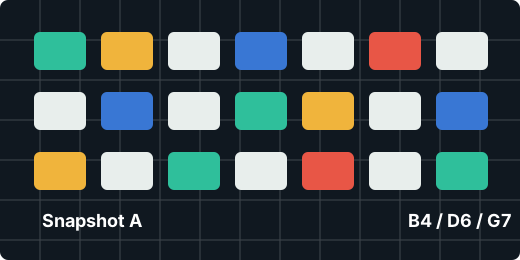
Tomodachi Life makes the apartment tower feel alive, but it can be hard to remember where every Mii lives once the island fills up. Living the Grid treats each apartment as a stable coordinate, so notes about friendships, interiors, gifts, and daily checks stay easy to compare.
Use simple labels such as B4 or G7 before adding the resident name. The coordinate stays useful even when you reorganize your roster.
Keep track of interiors, favorite colors, recurring items, and relationship events without scanning every apartment manually.
Record a clean state before major changes, new residents, marriages, travel tickets, or seasonal room experiments.
Start with columns from left to right, then count floors from bottom to top or top to bottom as long as you keep the same convention. The value is not the label itself; it is the discipline of using the same label every time.
The best notes are short, stable, and useful during play. Capture only details that help you make faster decisions later.
Keep a single grid sheet with names and rooms. This is enough for quick visits, gift planning, and remembering who moved where.
Add personalities, birthdays, relationships, catchphrases, and room history when you want a long-running island archive.
No. A grid works just as well for casual islands because it reduces repeated searching and keeps room notes compact.
Either is fine. Pick one direction, write it down once, and keep it unchanged across every snapshot.
A good note tells you where the resident lives, what room they use, and what changed recently. Anything more should earn its place.